

In conjunction with 12th IEEE International Conference on Network Softwarization (NetSoft 2026)
Berlin, Germany // 29 June – 3 July 2026
CALL FOR WORKSHOP PAPERS
The 12th IEEE International Conference on Network Softwarization (IEEE NetSoft 2026) will be held in Berlin, Germany from 29 June to 3 July 2026. Network Softwarization refers to the transition from legacy network infrastructures and functionalities traditionally provided via hardware appliances to new ones provided via software. This technology has become feasible with the maturity of network function virtualization, software-defined networking, and service function chaining in the last 16 years. In particular, the ability to program, manage, and operate network and service infrastructures more freely makes it possible to reinvent network & cloud architecture, customize services, accelerate service deployment, and facilitate greater operational efficiency. This is even more relevant nowadays, as network infrastructures and service deployment technologies are challenged by the growing interest in distributed Artificial Intelligence (AI) and computing solutions. The need for further advances in these topics is reflected in the overall theme of NetSoft 2026: “Autonomous and Reliable Softwarized Networks in the Age of Distributed Intelligence”.
- days
- hours
- minutes
- seconds
IMPORTANT DATES
- Workshop Paper Submission Deadline – Hard Deadline
30 March 2026 (already extended)
- Workshop PaperAcceptance Notification
27 April 2026
- Camera-ready Due
24 Apr 2026
- Workshop Date
Monday, 29 June 2026, afternoon
SCOPE AND MOTIVATION
Satellite constellations are emerging as an important component of future 6G networks. Such satellite constellations bring new paradigms for softwarisation and hence they are relevant for NetSoft. The workshop will focus on various challenges of softwarisation in space solutions, notably in non-terrestrial networks.
One of the goals of the workshop is to provide a forum for the community to exchange ideas and have a dialogue, with a specific focus on the software aspects of future non-terrestrial networks, space infrastructures.
TOPICS OF INTEREST
Within its scope, the workshop solicits research and industry papers treating research and engineering challenges on the following topics but not limited to:
- Transposing software solutions from terrestrial networks to non-terrestrial networks and their challenges;
- Use of Machine Learning and AI solutions in non-terrestrial networks;
- Routing challenges in large satellite constellations;
- Commoditization of functions between different missions, such as communication and Earth Observations;
- Middleware and repurposing mechanisms for digital payloads;
- 6G NTN software advancements;
- 6G core network adaptations for space deployments;
- Multi-access Edge computing in space environments;
- Network management for space environments;
- Breadboard experimental results;
- Future experimentation in orbit;
- Design of network functions for constrained space resources;
- Issues related to scaling;
- Tools, such as emulation frameworks;
- Protocol aspects;
- Function placement optimization;
Workshop Co-Chairs
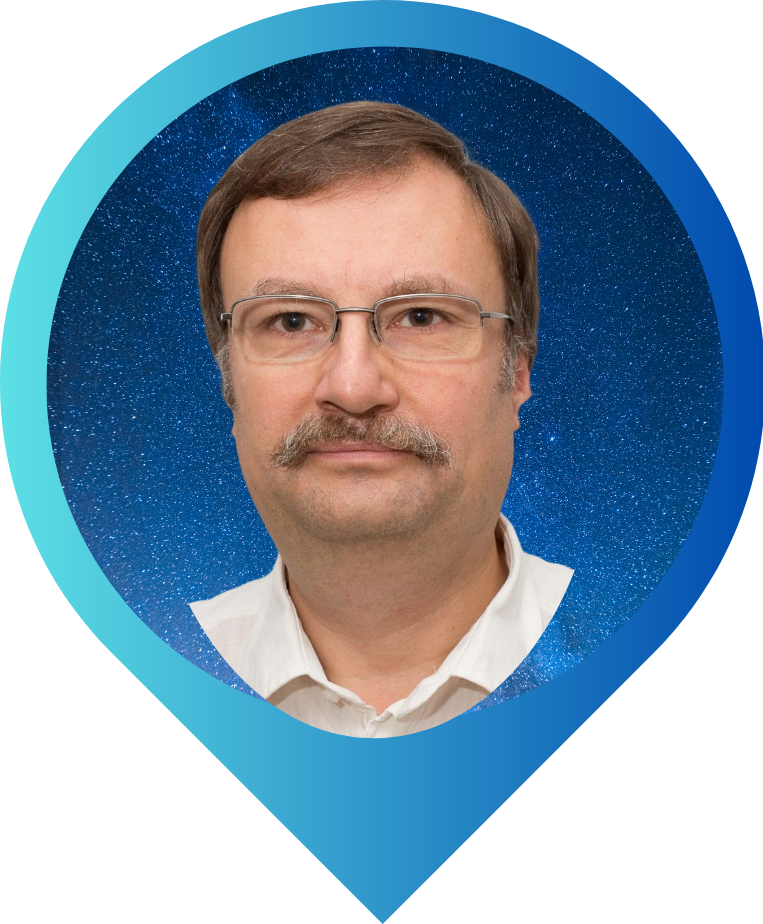 Adam Kapovits, Eurescom GmbH, Germany
Adam Kapovits is a Project and Programme Manager at Eurescom, where he has worked since 2000, bringing over 25 years of experience in academic and industry research. He has managed numerous international studies and collaborative projects focused on networking, supporting the priorities of European telecom operators and the wider communications industry. His work covers strategic research coordination, stakeholder engagement and innovation management, with a strong emphasis on aligning technical developments with industry needs and European research agendas.
 Maria Guta, European Space Agency, The Netherlands
Maria Guta is a Senior 5G/6G Non-Terrestrial Network Architect at the European Space Agency (ESA/ESTEC), with more than 20 years of experience in satellite communications and integrated network architectures. Her work focuses on the convergence of satellite and terrestrial technologies to support future 5G and 6G systems. She leads strategic initiatives within ESA’s Directorate of Telecommunications and Integrated Applications, contributing to programme development, technical coordination and long-term innovation planning across a wide range of non-terrestrial networking activities.
 Tomaso de Cola, DLR, Germany
Tomaso de Cola is the Area Director of the Space Internetworking Services Area at DLR, with extensive experience in satellite communications and networking research. He has served on the Technical Programme Committees of many IEEE international conferences and chaired satellite tracks at several ICC and Globecom editions. He has also acted as guest editor for various IEEE journals and magazines. An active IEEE ComSoc member, he previously chaired the Satellite and Space Communications Technical Committee and received the 2020 Distinguished Service Award for his contributions.
 Helmut Zaglauer, Airbus, Germany
Helmut Zaglauer is a Senior Expert in Services, Network Management and Standardisation at Airbus Defence and Space, with over 30 years of experience in space systems engineering, telecommunications and advanced research. He currently leads and manages major 5G Non-Terrestrial Network initiatives, contributing to projects such as 5G-AUTOSAT, 5G-ROUTES and 5G-IS, while supporting innovation in 5G/6G architectures and space-based infrastructures. His career includes senior engineering and project management roles across industry and research organisations, where he has coordinated complex technology developments and multidisciplinary teams.